


|
|
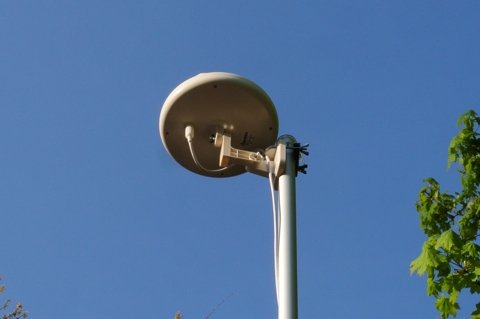
These days it seems you cannot go anywhere without the need for connectivity. It's more than just keeping up on the latest social media; but it seems everything is done on-line these days; on-line banking, work-from-home and other needs often dictate having an internet connection. Of course, perhaps the simplest solution is a smartphone, either used stand-alone or as a hot-spot. Carriers vary on the allowability of using your phone as a hot-spot, and their plans vary so much that I cannot begin to describe them here. Just realize this option exists. A hot-spot, if you don't know is essentially a router mated to a 4G carrier. This gives you the ability to connect to your 4G provider's internet service with multiple devices; laptops, tablets, smart phones, etc. The next option I suppose is the hot-spot itself. You can purchase inexpensive hot-spots from places like WalMart (Straight Talk) that cost around $20, with monthly plans that vary from $20~50 per month, depending on your data needs.
In a real-world situation, I am based in the US, and last year, we took a trip to Canada. We soon discovered both our hot-spot and phone quit working. Luckily though, my 2016 GMC has a built-in 4G hot-spot with unlimited access for $15 per month; with coverage in North America (US, Canada, and Mexico). So one press of the ON-Star button and I enabled it for the trip. I then downloaded a trial version of one of the internet phone apps, so we were able to retain our phone and internet connection. The only catch, and what prevents using the hotspot in the truck exclusively is the ignition must be on to use it - imagine that, a diesel-powered hot-spot). So while this is a bona-fide solution, it is not as practical as it could be.
At some point, you will want to go beyond a basic hot-spot, and several solutions exist, incluing WiFi extenders, RV amplified hot-spots, cell phone boosters, and combo units. Some of these can be quite expensive, over $600 in some cases. All of these solutions can be boiled down to two types; WiFi extenders and Cellular extenders. A WiFi extender requires an existing WiFi signal. It just amplifies it. Many campgrounds have WiFi, as well as resturants such as McDonalds and Bob Evans. Unfortunately, WiFi extenders cannot use a signal more than a couple hundred feet away, and often there are bandwidth issues due to many people simultaneously using the WiFi signal. But generally it is free, however a few campgrounds do charge a fee for using their WiFi service. The Cellular extender can be combined with a router creating a local hot-spot connected to the cell system, or a single device such as a smartphone or tablet. These devices work whenever there is a nearby cell tower (that your provider subcribes to). However, they are not free, as you must purchase a data plan just like the portable hot-spots. However, they typically have advanced antenna systems that provide an extended range.
Some of these devices also combine a WiFi booster and 4G Hotspot, which gives you mutiple options at each locale. Make sure the model you are interested in provides the desired service. |